
Everyday Arrangements
I arrange my collections into boxes and different spaces around my room, and each one holds its own meaning. Some of them are souvenirs, and some are childhood toys that bring back memories. I enjoy arranging them so they feel right to me and are easy to bring out and use. I collect miniatures, ceramic animals and displays, keyrings, shells, cuddly toys, and many other small objects that I like living with day to day.
When I sit with my collections, everything feels quieter. I don’t have to think too much – I can just look at the objects and remember where they came from or why I kept them. The way I arrange them matters to me. Some sit together because they remind me of the same time in my life, and others are grouped simply because I like how they look next to each other. It doesn’t have to follow a rule. It just has to feel right in the space.
The arrangement itself becomes part of the collection. Moving things slightly, changing their position, or placing them somewhere new allows the space to feel refreshed without replacing anything. It’s a small form of organisation that makes the room feel considered rather than accidental.
Small Things That Travel With Me
Keyrings are one of the easiest parts of my collection to bring into everyday life. They’re small and practical, but they also hold meaning. Some are from places I’ve visited, and others were gifts. I like that I can attach them to my keys or my bag and carry them with me. Even though they are small, they feel significant in a quiet way. They’re simple objects, but they stay with me throughout the day.
Because they are portable, they blur the line between collection and daily use. They are not just displayed – they are part of routine. That practicality makes them feel slightly different from other objects that remain in one place.
I have written more about my keyring collection in a previous blog post, where I explored how these small objects can become part of everyday life while still holding memories of places and people.
Objects That Stay
Miniatures
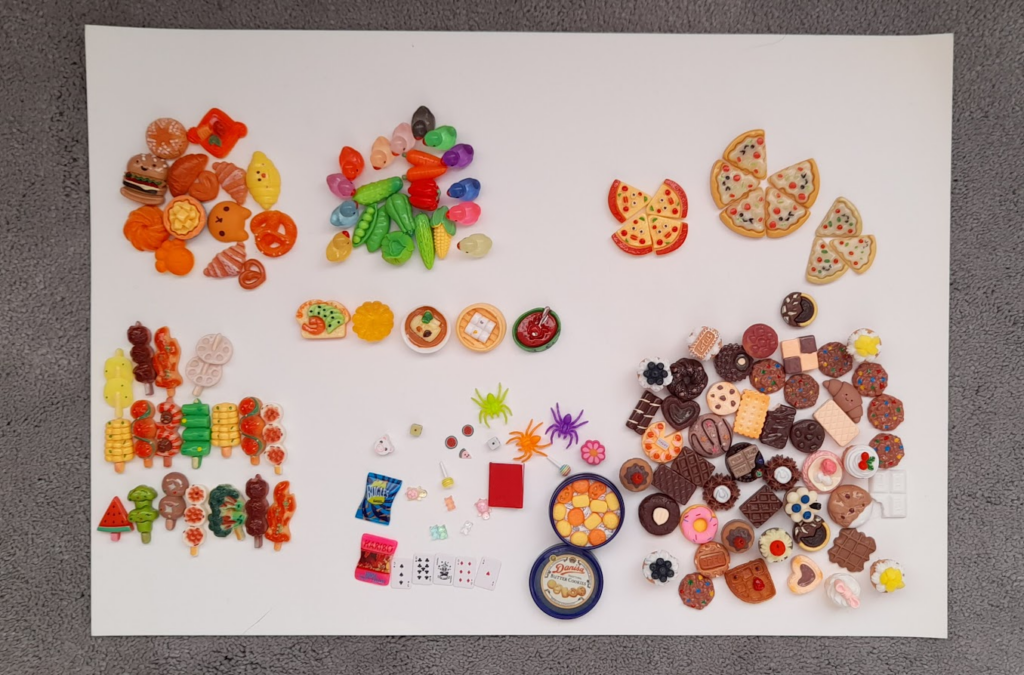
Miniatures are different. They usually stay in my room, arranged on shelves or grouped in certain spaces. Something is calming about small objects. They don’t take up much space, but they still feel important. Sometimes I group them by colour or theme, and sometimes I place them together simply because I like how they look next to each other.
Small objects like these encourage closer attention. Because they are detailed and compact, they invite careful placement and observation.
Ceramic Animals
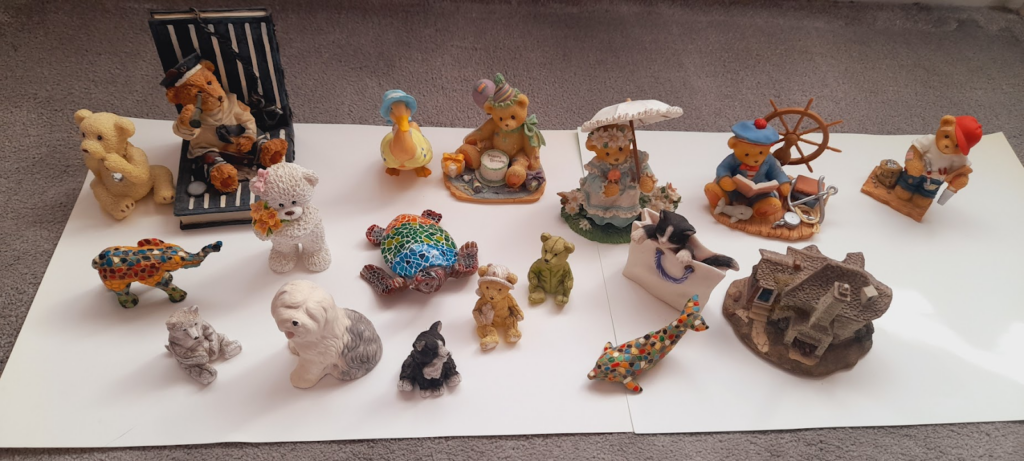
Ceramic animals are similar but feel slightly more decorative. They are often placed together in small groups and become part of the overall space. Even when the arrangement is simple, they add character to the room.
Shells
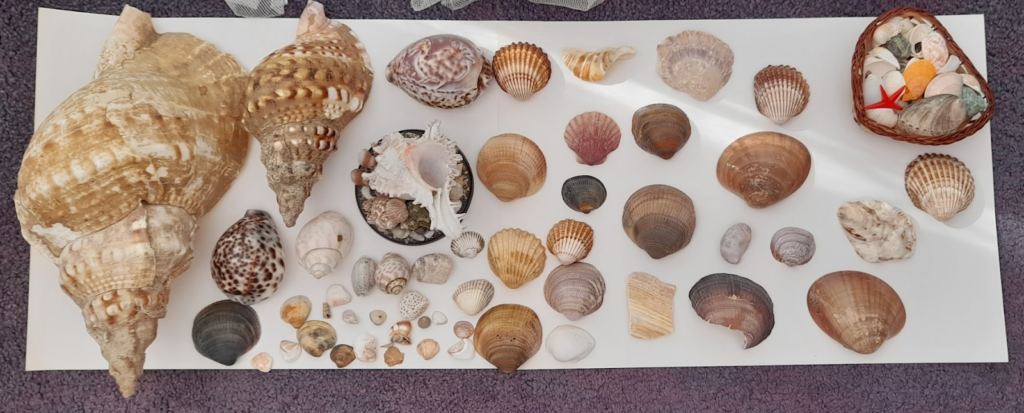
Shells feel connected to places. When I look at them, I can usually remember where I found them. Even if they’re simple, they feel personal. They represent a decision to keep something small from a specific moment.
Unlike many other objects, shells come from the natural world, shaped over time. Keeping them feels like holding onto a small part of a place.
Cuddly Toys
Cuddly toys feel different again. Some of them are from childhood. They’re softer and more familiar. Even if they just sit on a shelf or on my bed, they become part of the room steadily. They are less about display and more about continuity objects that have remained while other things have changed.
Growing Over Time
Over time, my collections have changed. Some items stay, and some move into boxes. New things get added when something feels worth keeping. I don’t collect everything – only the things that stand out enough to remain. The collection grows slowly, almost without me noticing.
This gradual growth makes it feel natural rather than forced. It isn’t about building something impressive or complete. Instead, it develops through everyday experiences. When I look at everything together, it feels like a timeline made up of small, physical pieces. Each object marks a moment when I decided something mattered enough to hold onto.
Why People Collect
Collecting is not unusual. Many people keep certain items, even if they don’t think of it as a collection. Some collect books, clothing, records, postcards, or photographs. Others keep birthday cards, ticket stubs, or small objects from holidays. Choosing to keep something gives it weight. It becomes more than an object; it becomes a reminder, a marker, or simply something enjoyable to own.
Collections can reflect personality, interests, or stages of life. They can be carefully organised or casually stored. There is no single correct way to build one. What connects them is intention – the quiet decision that something is worth keeping.
Why It Matters
Collecting and arranging isn’t just about having things. For me, it’s about keeping pieces of different stages of my life and shaping my space in a way that feels personal. The objects don’t need to make sense to anyone else. They just need to feel right.
In a world where objects are often replaced quickly, keeping something long-term feels deliberate. Small items can hold steady value even as everything else changes.
Everyone keeps something – whether it’s photos, clothes, books, or small souvenirs. My collections are simply my version of that. They remind me of where I’ve been and what I’ve chosen to hold onto.